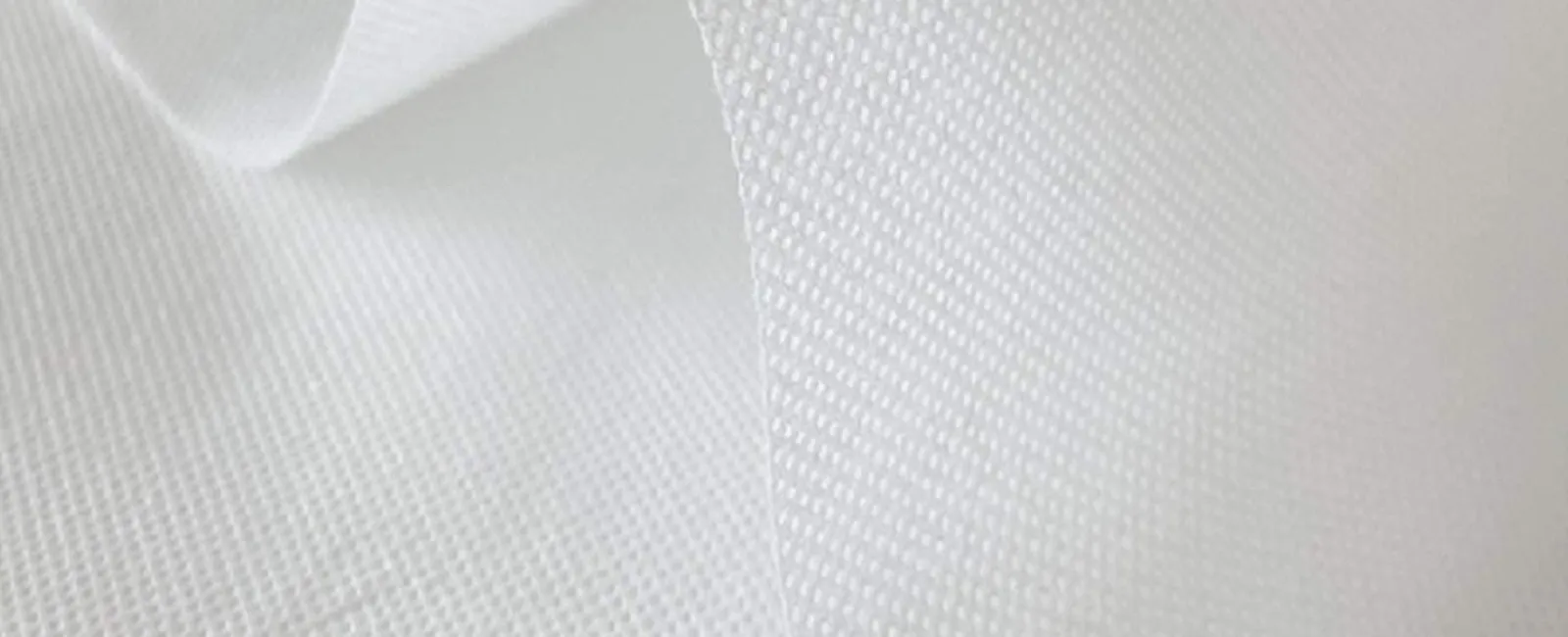
Before You Specify a Custom Fabric, Start With the Fiber
Every custom fabric project starts with the same question. What does the fabric need to do?
The answer determines everything that follows: fiber type, weave construction, weight, width, and finishing. Get the fiber wrong and no amount of engineering downstream will save the project. Get it right and the fabric becomes one of the most reliable components in the system.
The challenge is that most engineers and procurement managers are not textile specialists. They know their application inside and out, but translating application requirements into a fabric specification is unfamiliar territory. The fiber options are broad, the tradeoffs are real, and the differences between a good choice and the right choice can show up months later as premature failure, unnecessary cost, or both.
This guide walks through the most common fiber types used in custom industrial fabrics, what each one does well, where each one falls short, and how to match fiber properties to application demands. It is written for engineers, product designers, and procurement managers who need to specify a custom fabric and want to make an informed decision before the first yard goes on the loom.
The Fiber Lineup: What Each Material Brings to the Table
Polyester
Polyester is the most widely used fiber in industrial fabrics for good reason. It offers strong tensile strength, good abrasion resistance, low moisture absorption, and solid UV stability at a moderate cost. It holds up well in outdoor environments and resists mildew and most common chemicals.
Where it falls short: polyester degrades in concentrated alkaline environments and has a continuous temperature ceiling around 300°F (150°C). If your application involves caustic chemicals or sustained heat above that threshold, polyester is not the right fiber.
Best applications:
- Conveyor belting
- Filtration media for moderate temperatures
- Geotextiles
- Outdoor protective covers
- General-purpose industrial fabrics where cost efficiency and durability both matter
Nylon delivers the highest abrasion resistance of any common industrial fiber. It also offers excellent tensile and tear strength, good elasticity, and strong resistance to impact loading. Nylon is the fiber engineers reach for when the application involves repeated mechanical stress, flexing, or friction.
Where it falls short: nylon absorbs moisture, which changes its dimensional stability and mechanical properties. It degrades under prolonged UV exposure and has a temperature ceiling around 250°F (120°C). It is also more expensive than polyester and more susceptible to acid attack.
Best applications:
- Parachute fabrics
- Airbag components
- Conveyor belts in high-abrasion environments
- Hose reinforcement
- Tire cord
- Applications where impact resistance and mechanical endurance are the primary requirements
Polypropylene is the lightest common industrial fiber and the most chemically resistant of the non-fluoropolymer options. It resists acids, bases, and most organic solvents. It will not absorb moisture, and floats on water. Polypropylene is also the most cost-effective fiber on this list.
Best applications:
- Durable workwear
- Wiping cloths
- Polishing fabrics
- Backing materials
- Applications where absorbency, natural feel, or recyclable content requirements outweigh the need for chemical or thermal performance
Beyond the Fiber: What Else Determines Performance
Selecting the right fiber is the most important decision, but it is not the only one. Three other variables shape how a custom industrial fabric performs in service.
Plain weave gives the tightest, most dimensionally stable fabric. Twill weave offers more flexibility and better drape. Satin weave provides the smoothest surface and best release properties. Basket weave adds bulk and abrasion resistance. Dobby weave allows complex patterns for decorative or functional purposes. The right weave depends on whether the application priorities are filtration efficiency, mechanical flexibility, surface properties, or a combination.
Fabric weight and width.
Heavier fabrics (measured in oz/sq yd or GSM) generally offer more durability but less flexibility. Width requirements are driven by the end-use fabrication process. Custom widths from 30 inches to 90 inches are possible when working with Southern Industrial Fabrics.
Finishing.
Heat-setting improves dimensional stability. Calendering smooths the surface. Coating adds water resistance, flame retardancy, or chemical barrier properties. The finishing step can meaningfully change a fabric's behavior, and specifying it correctly matters as much as fiber selection.
How to Start a Custom Fabric Project
The fastest path from application requirements to a finished fabric specification involves three things.
First, define what the fabric needs to survive. Perhaps it has to resist temperature range, chemical exposure, mechanical stress, UV exposure, moisture, and expected service life. The clearer this picture, the faster the fiber selection narrows.
Second, define what the fabric needs to do such as filtration efficiency, tensile strength targets, weight limits, flexibility requirements, flammability ratings, or regulatory compliance. These determine the weave, weight, and finishing beyond the fiber choice.
Third, work with a manufacturer who can develop a custom construction, produce sample yardage for validation, and scale to production once the specification is confirmed.
At Southern Industrial Fabrics, we weave custom fabrics from all of the fiber types covered in this guide, in-house at our facility in Rossville, Georgia. Our engineering team works directly with customers from fiber selection through finished fabric, including rapid prototyping for applications where testing before committing matters.
If you have an application that needs a custom fabric and you are not sure where to start, that is exactly where we come in.